The Craft of the
Khukuri
Inside the traditional process behind every Himalayan Forge blade.

Workshop Gallery


Traditional Techniques
Forging the Blade
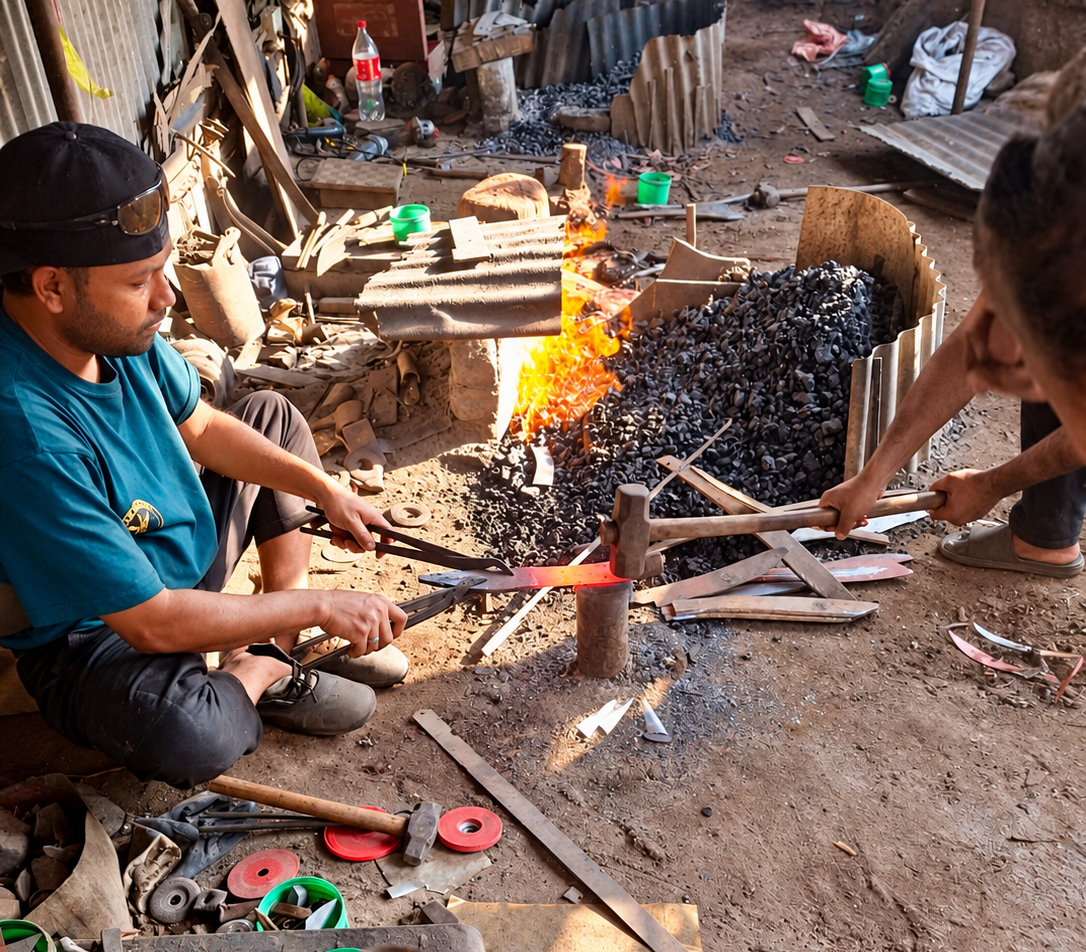
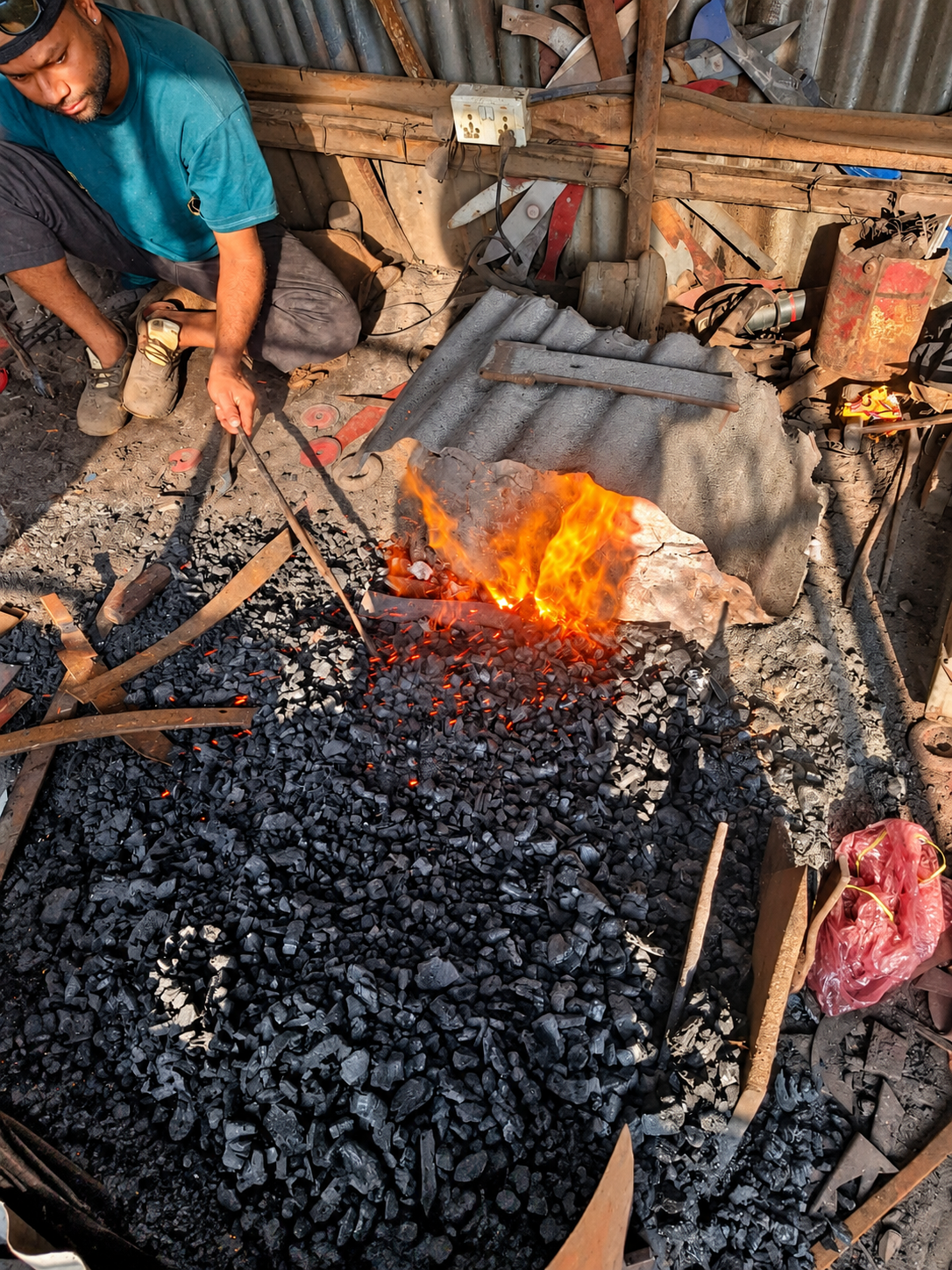
The process begins by heating high-quality steel in a charcoal forge until it glows bright orange. Our smiths then hand-hammer the raw material into the iconic curved profile of the Nepali blade.
Shaping & Grinding
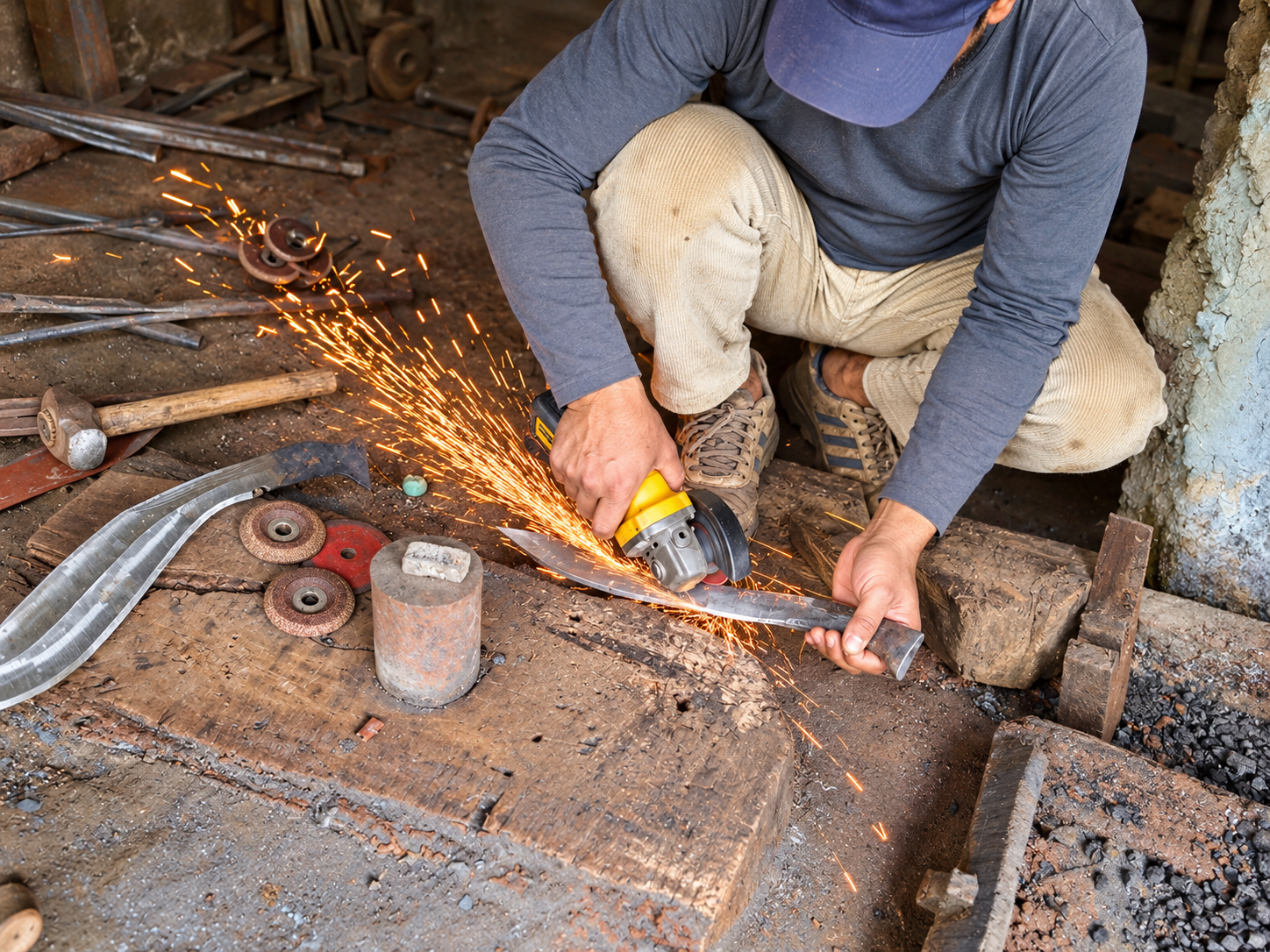
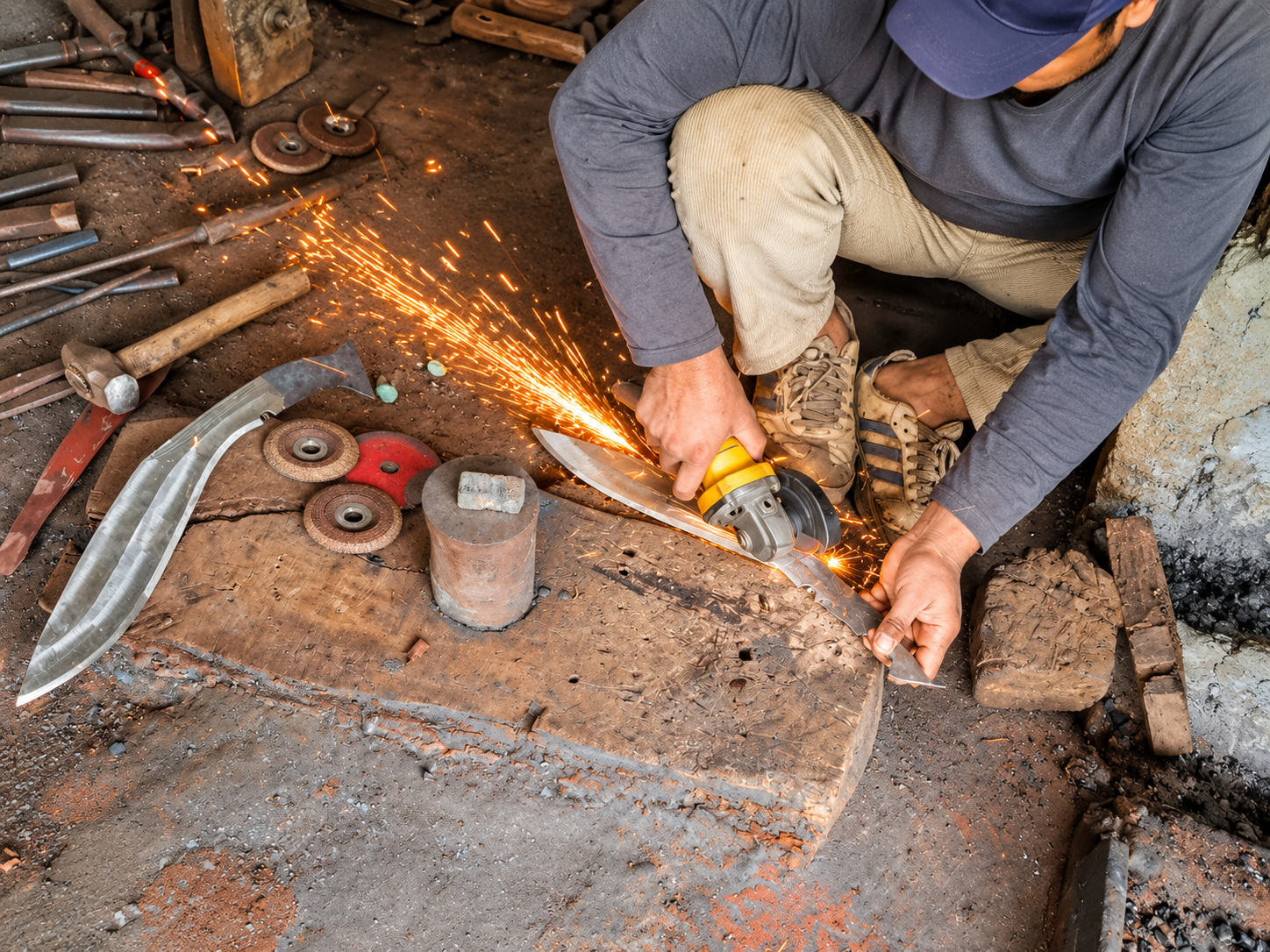
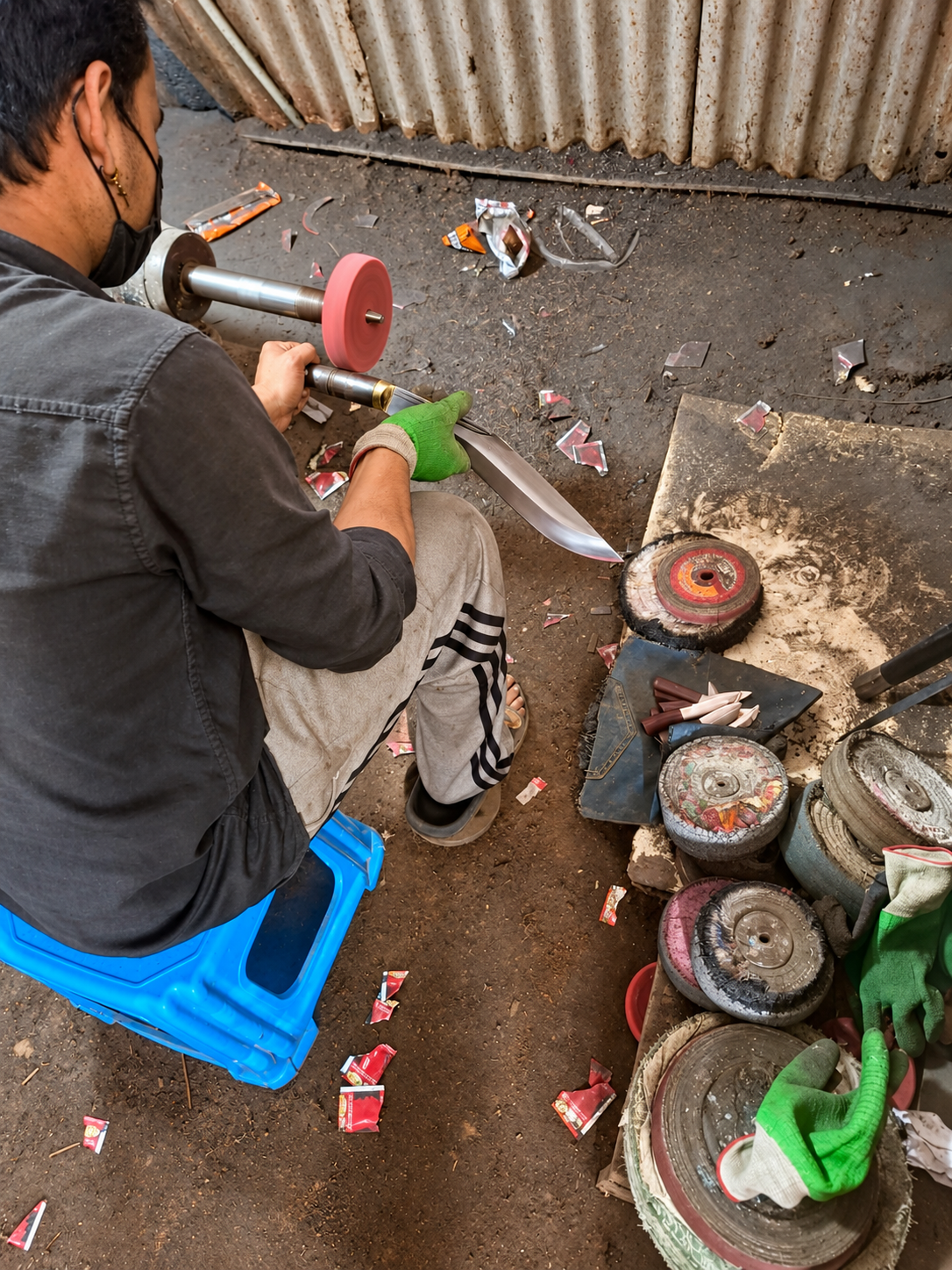
Once the basic shape is formed, the blade undergoes careful grinding to define the edge and the distinct 'chiura' or fullers. This step ensures the knife achieves its famous weight-forward balance.
Heat Treating
Critical for durability, the edge is differential heat-treated by pouring cold water over the heated blade. This creates a hard, razor-sharp edge supported by a tough, flexible spine.
Polishing & Sharpening
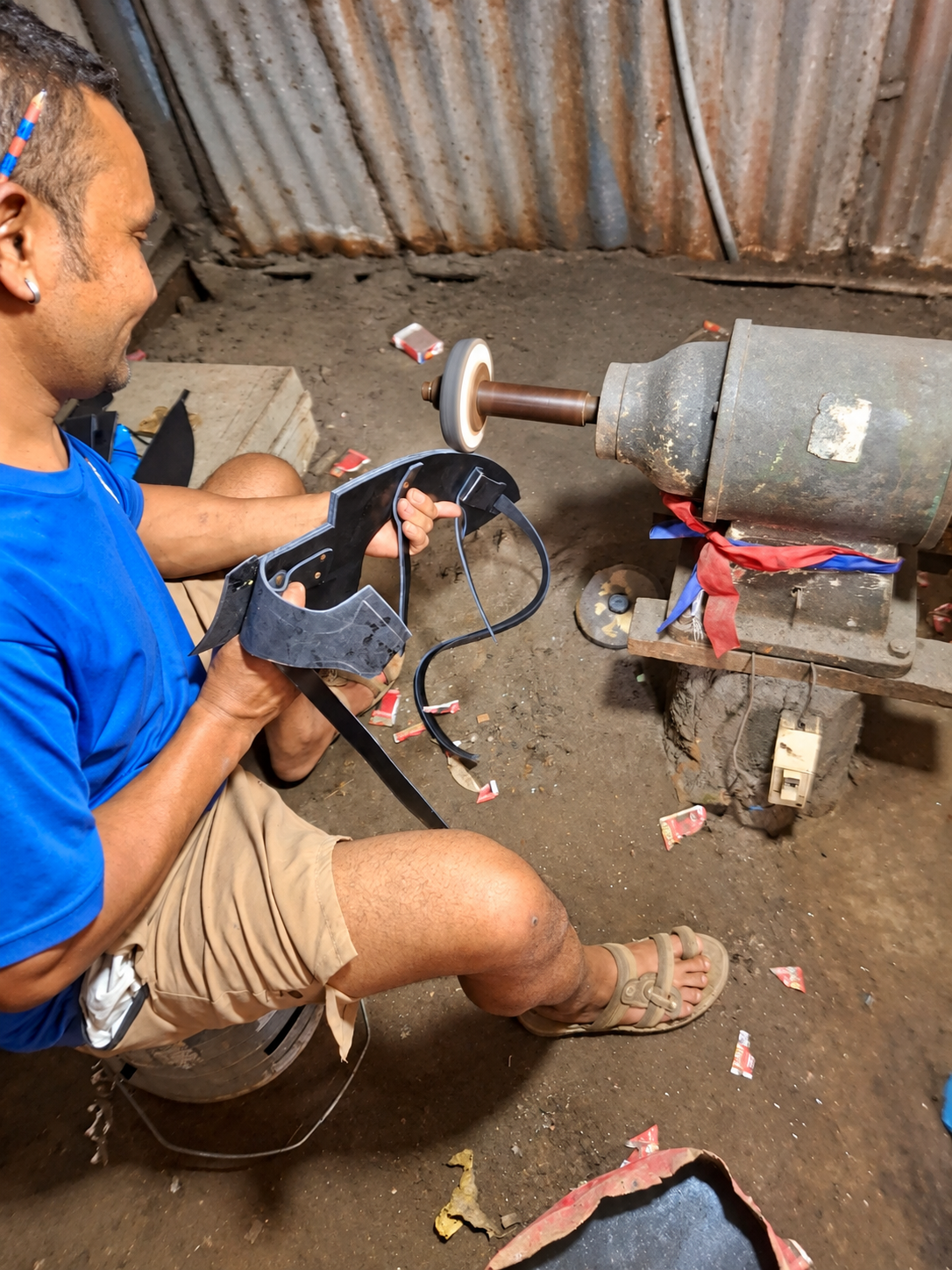
The metal is polished to a fine sheen using traditional abrasives. Hand-sharpening follows, giving the Khukuri its legendary cutting ability and edge retention.
Handle & Final Fit
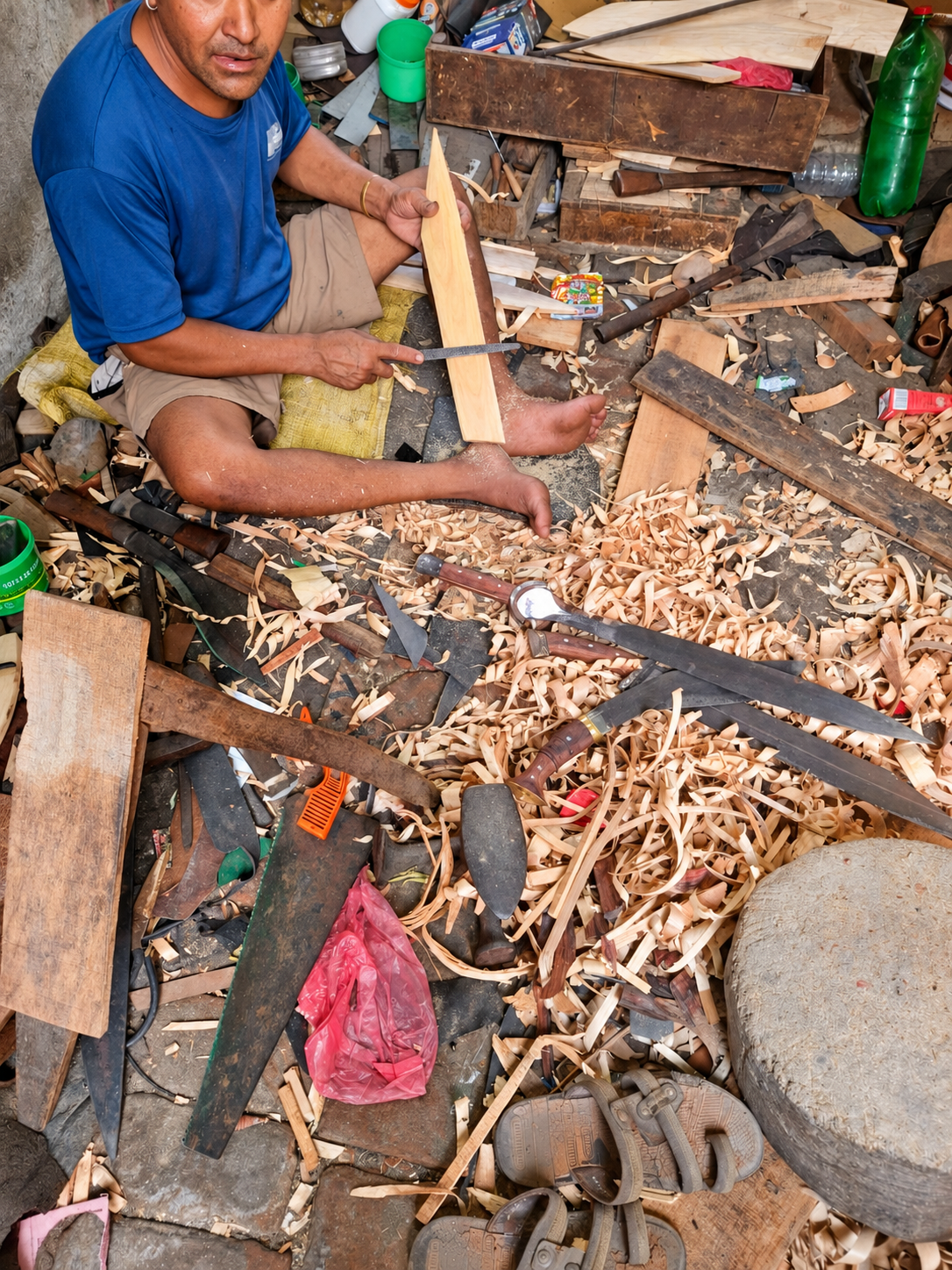
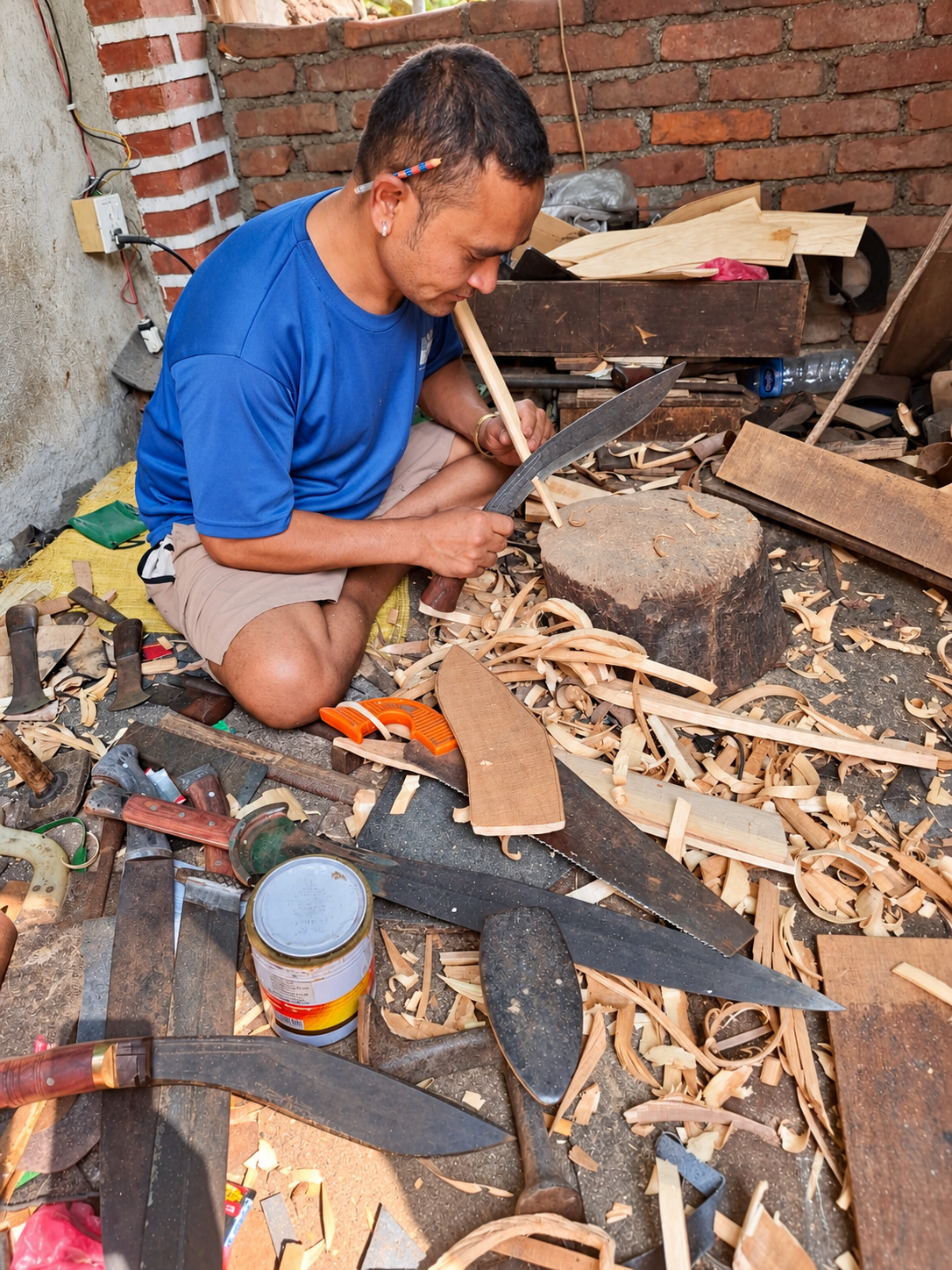
Last, we secure the handle—hand-carved from water buffalo horn or rosewood—to the tang. A final inspection ensures the knife is perfectly seated in its handmade scabbard.